How Digital IPD Can Track Patient Education and Acknowledgements Across Inpatient Care
Patient education is woven into inpatient care, from medication instructions and procedure information to mobility, diet and discharge guidance. Yet the documentation of those conversations can become fragmented when teams rely on multiple paper forms or separate notes.
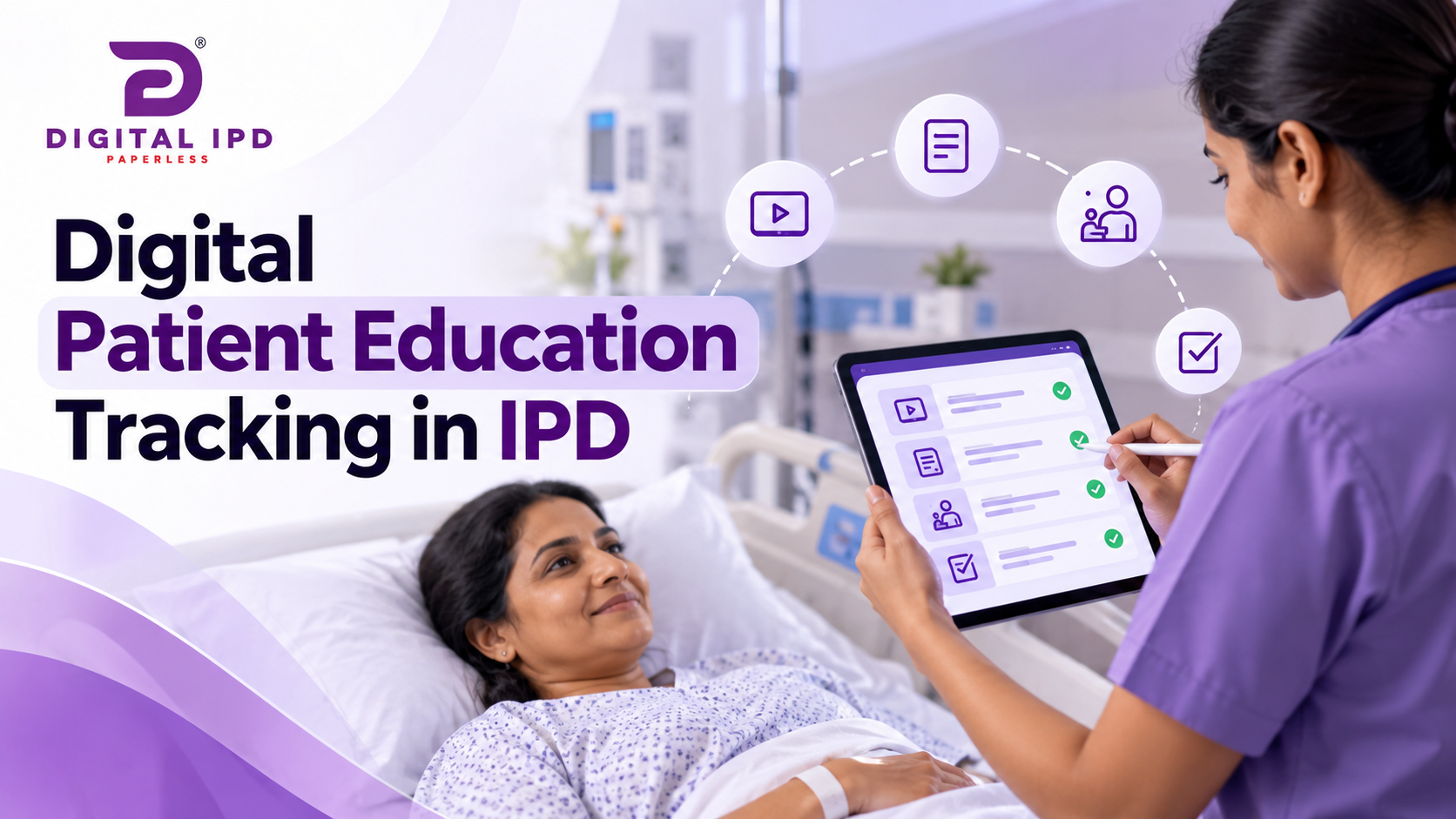
A structured digital workflow can give relevant education and acknowledgement a defined place in the inpatient record. The aim is not to turn every conversation into paperwork. It is to make important communication easier to document, retrieve and hand over.
Why patient education records matter
Patients and caregivers may receive information at different stages of a hospital stay and from different members of the care team. When the record does not show what was discussed, continuity becomes harder to establish.
Digital documentation can reduce dependence on physical files and improve visibility of the information that matters, provided the fields are aligned with the hospital's actual care process.
Capture only information that serves the workflow
The exact fields should reflect hospital policy and the education activity. A useful structure may identify the topic, date and time, responsible staff member, acknowledgement where required and any follow-up concern.
The system should avoid creating long forms that staff complete mechanically. A short, meaningful structure is more likely to be used consistently.
Use bedside documentation to support continuity
When information is recorded close to the point of care, the next team member can understand what has already been discussed without searching through several documents. Timestamps and user attribution can also help distinguish recent information from older entries.
This is particularly useful when patients move between wards or when family members receive instructions at different points in the stay.
Design for real hospital conditions
Hospitals need to think about devices, connectivity, workflow variation and downtime. Staff should know what to do if a network is unavailable and how entries are reconciled afterwards so the process does not create duplicates or gaps.
Implementation should include frontline staff. Their feedback can reveal whether a template is too long, unclear or out of step with bedside routines.
Use structured data for process improvement
Once documentation is consistent, hospitals can review patterns such as repeated education topics, late delivery of important instructions or gaps at particular points in the inpatient journey. These patterns can inform quality improvement.
Digital IPD is strongest when it behaves as part of the inpatient workflow rather than as a separate documentation task. Better structure should support clinical coordination, not add another layer of work.
Relevant Internal Reading
Digital IPD blog and inpatient workflow resources
Things to Keep in Mind
- Keep patient education documentation relevant and proportionate.
- Use clear timestamps and responsible-user information where appropriate.
- Design downtime and recovery procedures before rollout.
- Build templates with bedside teams, not only software teams.
- Use aggregated data for workflow improvement rather than treating documentation as the care itself.
Frequently Asked Questions (FAQs)
What is patient education documentation in IPD?
It is the record of relevant information communicated to a patient or caregiver during inpatient care according to the hospital's policies.
Can digital documentation replace patient education?
No. It records relevant communication but does not replace the explanation or professional judgement of healthcare staff.
Why use structured fields?
They can make important entries more consistent, searchable and easier to review.
What happens during a network outage?
Hospitals should use a defined downtime process and reconcile entries correctly when connectivity is restored.
Wrapping It Up
Digital IPD is positioned around connected bedside documentation and more organised inpatient care.
A practical approach is to connect the topic back to the people, processes, and decisions it is meant to support. The goal is not to add complexity, but to make the underlying workflow clearer, more reliable, and more useful.
Resources
Digital IPD - Inpatient documentation: https://digitalipd.in/blog
Interlinking Keywords
Digital IPD blog and inpatient workflow resources: https://digitalipd.in/blog
Editorial / Medical Disclaimer
This article discusses healthcare technology and operational practices for informational purposes. Specific implementation decisions should be assessed against the hospital's clinical, operational, security and regulatory requirements and reviewed by appropriate professionals.