Introduction
Hospital operations in India are changing at a pace that was unimaginable just a decade ago. Across metropolitan cities and Tier 2 towns alike, hospital administrators, medical directors, and nursing heads are recognizing that paper-based systems are no longer adequate for the complexity and scale of modern inpatient care. The demand for reliable, efficient, and compliance-ready hospital software has never been stronger.
India's healthcare sector now serves over 1.4 billion people and is growing rapidly. According to the Ministry of Health and Family Welfare, India has over 70,000 hospitals, and the healthcare industry is projected to reach USD 638 billion by 2026. With the government actively pushing the Ayushman Bharat Digital Mission (ABDM) and the National Health Policy emphasizing digital health infrastructure, hospitals that invest in smart software solutions are positioning themselves for long-term operational excellence.
This guide is written specifically for hospital owners, CEOs, medical directors, administrators, and quality teams in India who want to understand the landscape of hospital software, what to look for, and how the right platform can transform their inpatient operations.
Understanding Hospital Software: What It Covers and Why It Matters
Hospital software, commonly referred to as Hospital Management Software (HMS) or Hospital Information Systems (HIS), is a broad category of digital tools designed to manage the administrative, clinical, and operational functions of a hospital. In the Indian context, this typically includes patient registration, outpatient department (OPD) management, inpatient department (IPD) workflows, billing, pharmacy, laboratory, radiology, and medical records.
However, there is a critical distinction that many hospitals overlook. A conventional HMS manages the workflow around the patient, while a dedicated IPD documentation platform manages what happens at the bedside. These two needs are fundamentally different. Inpatient care requires real-time documentation of vitals, nursing notes, medication records, doctor observations, treatment updates, and discharge processes. When these activities depend on physical files and manual paper entry, the risk of errors, delays, and compliance gaps increases significantly.
This is why a growing number of Indian hospitals are moving toward connected bedside documentation systems that sit alongside their existing HIS, filling the gap that traditional software never adequately addressed.
Key Categories of Hospital Software Solutions in India
Indian hospitals typically require software support across several functional areas. Understanding these categories helps decision-makers select solutions that align with their specific operational needs.
Hospital Management Systems (HMS): These are the foundational platforms that cover OPD scheduling, billing, patient registration, laboratory integration, pharmacy management, and basic IPD tracking. Widely used HMS providers in India include platforms built for both small nursing homes and large multi-specialty hospitals.
Electronic Medical Records (EMR) Systems: EMR platforms focus on capturing and storing patient health data digitally. A well-implemented EMR reduces dependency on physical case files and supports faster clinical decision-making.
IPD Documentation and Bedside Care Platforms: This is one of the most rapidly growing segments in Indian hospital software. Platforms dedicated to inpatient documentation help hospitals manage nursing workflows, doctor notes, consent forms, vitals recording, MRD readiness, and discharge summaries in a structured digital environment.
Laboratory Information Management Systems (LIMS): These manage lab workflows, test orders, results, and reporting.
Radiology Information Systems (RIS) and Picture Archiving and Communication Systems (PACS): These are essential for hospitals with imaging departments.
Pharmacy Management Software: Manages drug inventory, dispensing, and billing.
Each of these categories addresses a specific operational need. Modern hospitals in India are increasingly looking for platforms that either integrate all these functions or work seamlessly alongside a core HMS without creating workflow disruption.
What Indian Hospitals Should Look for in Hospital Software
Selecting the right hospital software is a strategic decision. The following considerations are especially important for Indian hospitals navigating this choice.
NABH Alignment and Compliance Readiness: The National Accreditation Board for Hospitals and Healthcare Providers (NABH) sets the quality and documentation standards that define a hospital's credibility in India. Any hospital software investment must support NABH-oriented documentation workflows. This includes structured nursing records, medication administration records, patient consent documentation, incident reporting, and clinical audit trails.
ABDM Compatibility: The Ayushman Bharat Digital Mission is creating a unified digital health ecosystem across India. Software that supports ABDM integration, including ABHA ID linkage and Health Information Exchange, will be essential for hospitals participating in government health schemes and building long-term digital health records.
Bedside Usability for Nursing and Clinical Staff: A hospital software platform is only as effective as its adoption on the ground. If nursing staff find it difficult to use at the bedside, documentation accuracy suffers and the platform delivers little value. Software must be designed with real hospital workflow logic, not just administrative logic.
Integration with Existing HIS: Most established hospitals in India already have a core HMS in place. The right software addition should complement this ecosystem rather than replace it entirely, reducing the burden and cost of full-system migration.
Data Security and Privacy: With the Digital Personal Data Protection Act (DPDPA) 2023 gaining traction in India, hospitals must ensure their software vendors follow strong data security practices. Patient health data is sensitive, and hospitals carry both ethical and legal responsibility for its protection.
Scalability for Multi-Location Operations: Hospital groups with multiple branches or expanding chains need software that can scale across locations while maintaining centralized visibility and standardized documentation protocols.
The Rise of IPD-Specific Digital Solutions in India
One of the most significant shifts in Indian hospital software adoption over the past few years is the recognition that IPD workflows need dedicated digital attention. Traditional HMS platforms were built primarily for OPD billing and registration. The inpatient side, which involves continuous clinical documentation, nursing handovers, medication tracking, consent management, and discharge coordination, was largely managed through physical files, nursing registers, and manual charts.
This approach creates serious operational problems. Paper records are difficult to retrieve, prone to damage and loss, hard to audit, and create significant delays during discharge and MRD submission. For hospitals pursuing NABH accreditation or seeking to improve clinical quality scores, the paper-based IPD process is a persistent vulnerability.
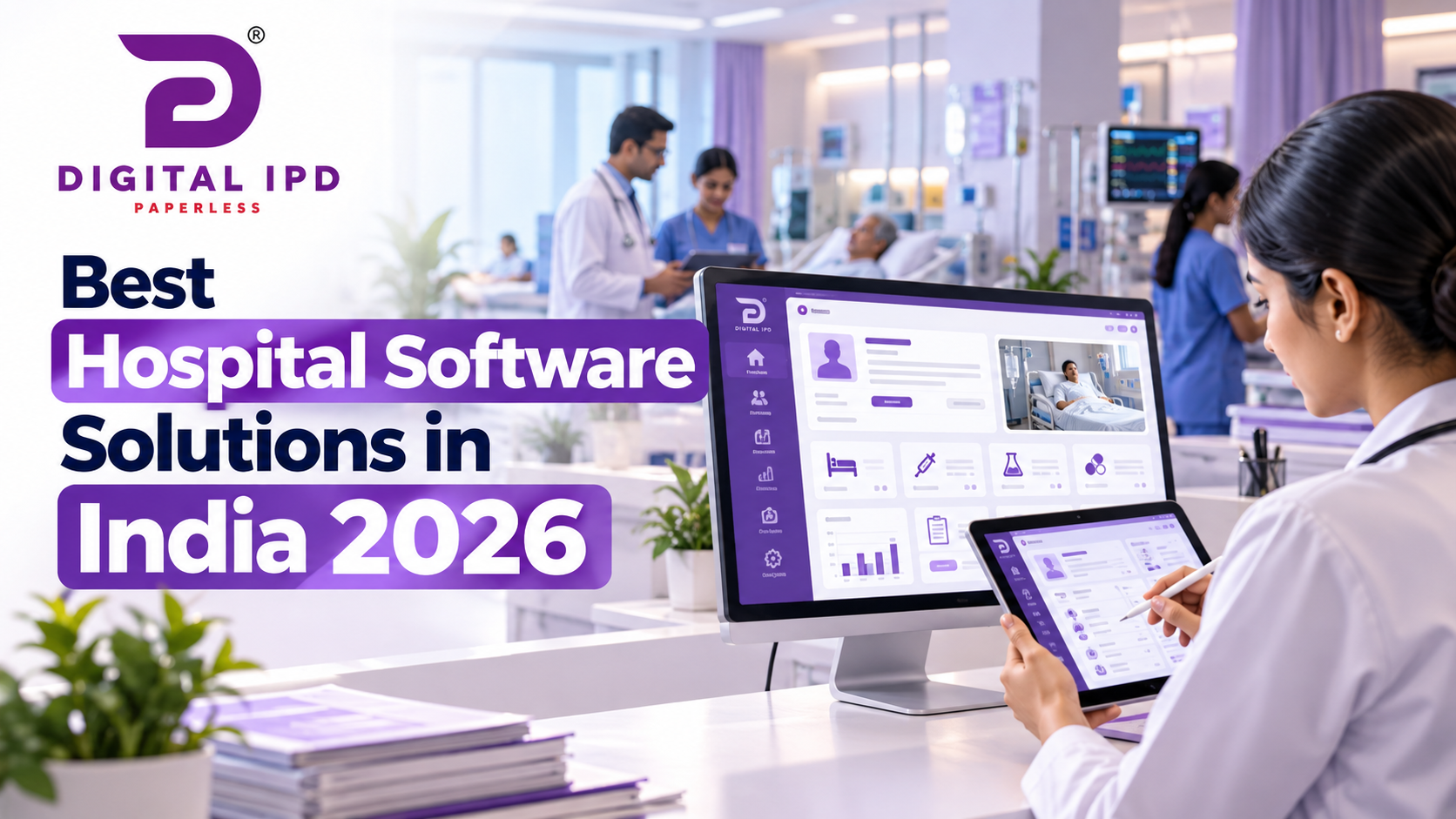
Platforms like Digital IPD by Caresoft address this gap directly. Rather than replacing the entire HMS, Digital IPD functions as a connected bedside documentation experience layered on top of the hospital's existing systems. This allows nursing teams to record vitals and observations digitally at the bedside, doctors to update treatment notes in real time, and administrators to access structured records instantly when needed for billing, MRD submission, or quality audits.
For hospitals in India that have struggled with the transition to full-scale HIS replacement, this model offers a practical and less disruptive path to digitizing their IPD operations.
How IPD Digitization Supports Better Hospital Operations
When hospitals invest in proper IPD documentation platforms, the operational benefits extend well beyond paperwork reduction. The following outcomes are commonly observed in hospitals that have made this transition.
Faster Discharge Readiness: When all inpatient documentation, including nursing notes, medication charts, doctor updates, and consent forms, is captured digitally throughout the patient stay, the discharge summary can be prepared more quickly and accurately. This reduces average length of stay and improves bed utilization, which is critical for hospitals managing high patient volumes.
Stronger Nursing Accountability and Coordination: Digital documentation creates a clear, timestamped record of every nursing action and observation. This supports better shift handovers, reduces the risk of missed documentation, and makes it easier for nursing heads to audit care quality across the ward.
Improved Doctor-Nurse Communication: When doctors and nurses operate from a shared digital record rather than a physical file that moves between locations, communication gaps are reduced. Doctors can review nursing observations before making rounds, and nurses can see updated treatment orders in real time.
MRD Readiness and Reduced Record Backlogs: Medical Records Departments in Indian hospitals often face enormous backlogs of incomplete or illegible paper files. Digital IPD documentation creates structured, complete records that are MRD-ready from admission, significantly reducing the post-discharge documentation burden.
Support for NABH Documentation Standards: NABH requires hospitals to maintain specific documentation protocols for inpatient care. Digital platforms that are designed around NABH standards make compliance a natural outcome of daily operations rather than a separate audit exercise.
Evaluating Hospital Software Vendors in India
The Indian healthcare IT market includes a mix of large enterprise vendors, mid-size specialized platforms, and newer digital-first solutions. When evaluating vendors, hospital decision-makers should assess the following.
- Implementation support and onboarding quality, including staff training and go-live assistance
- Customization capability to match the hospital's existing workflows rather than forcing workflow changes to fit the software
- After-sales support responsiveness, including dedicated account management and help desk availability
- Reference customers and proven deployment history in hospitals of similar size and type
- Vendor stability and long-term commitment to the healthcare domain
Caresoft, the company behind Digital IPD, brings decades of healthcare IT experience to the Indian hospital market. This background in real hospital workflows is reflected in how Digital IPD is structured, prioritizing practical bedside usability over generic software design.
Conclusion
India's hospitals are at a defining moment in their digital journey. Government initiatives like ABDM and Ayushman Bharat are creating a strong policy environment for digital health adoption. Patient expectations are rising. Quality accreditation bodies like NABH are setting higher documentation standards. And hospital administrators are increasingly aware that paper-based inpatient processes are a barrier to both operational efficiency and clinical quality.
The best hospital software solutions in India are those that address real operational problems with practical, usable, and well-supported platforms. For inpatient care specifically, the shift toward connected bedside documentation is not a future trend but a present requirement. Hospitals that invest in the right IPD documentation platforms today are building the foundation for faster discharges, better nursing coordination, stronger compliance readiness, and a more modern patient care experience.
Frequently Asked Questions
Q1: What is the difference between HMS and IPD documentation software?
A Hospital Management System (HMS) manages the broader administrative and operational functions of a hospital, including OPD registration, billing, pharmacy, and laboratory modules. IPD documentation software specifically addresses the inpatient care environment, covering bedside documentation, nursing workflows, doctor notes, vitals recording, consent forms, and discharge summaries. Many hospitals use both together to ensure complete digital coverage.
Q2: Is hospital software in India compatible with NABH accreditation requirements?
Several hospital software platforms in India are designed to support NABH documentation standards. However, compatibility varies significantly between vendors. Hospitals should specifically verify whether the software supports structured nursing records, medication administration documentation, patient consent workflows, clinical audit trails, and incident reporting, all of which are essential for NABH compliance.
Q3: What is the Ayushman Bharat Digital Mission and how does it affect hospital software?
The Ayushman Bharat Digital Mission (ABDM) is a Government of India initiative aimed at creating a unified digital health ecosystem. It introduces the ABHA health ID, digital health records, and Health Information Exchange frameworks. Hospitals are increasingly expected to integrate with ABDM-compliant infrastructure, and software vendors that support this integration help hospitals participate in national health programs and build interoperable patient records.
Q4: How can a hospital digitize its IPD without replacing its existing HMS?
Many hospitals in India choose to add a dedicated IPD documentation platform alongside their existing HMS rather than replacing the entire system. Platforms like Digital IPD are designed to integrate with core hospital systems and fill the documentation gap at the bedside level without disrupting existing OPD, billing, or laboratory workflows. This approach reduces migration risk and implementation time significantly.
Q5: What should a hospital check before purchasing hospital software in India?
Before purchasing, a hospital should evaluate NABH and ABDM compatibility, ease of use for clinical and nursing staff, integration capability with existing systems, vendor support quality, reference deployments in similar hospitals, data security practices aligned with India's DPDPA 2023, and the total cost of ownership including implementation, training, and annual support.
Resources
- National Accreditation Board for Hospitals and Healthcare Providers (NABH): Standards and accreditation guidelines for Indian hospitals, available at nabh.co
- Ayushman Bharat Digital Mission (ABDM): Official government initiative for India's digital health ecosystem, including ABHA and Health Information Exchange frameworks, available at abdm.gov.in
- Ministry of Health and Family Welfare, Government of India: Policy documents, national health programs, and hospital infrastructure data, available at mohfw.gov.in
- Digital Personal Data Protection Act 2023, Government of India: Legal framework governing the protection of personal and health data in India, available at meity.gov.in
Interlinking Keywords
hospital management software India, IPD documentation platform, bedside documentation system, NABH compliance software, digital inpatient records, paperless hospital software, hospital information system India, ABDM compatible hospital software, nursing workflow software, MRD readiness hospital
Last Reviewed By
Dr. Manthan Tripathi and the Digital IPD Content and Clinical Advisory Team on 23 September 2026.
Disclaimer
This article is intended for informational and educational purposes only. It does not constitute medical, clinical, or legal advice. Hospitals and healthcare institutions should consult qualified healthcare IT professionals, regulatory consultants, and accreditation bodies before making software procurement or operational decisions. Digital IPD and Caresoft Global do not guarantee specific outcomes from software implementation. Compliance with NABH, ABDM, or any other regulatory framework depends on individual hospital processes, configurations, and operational context.